An investigative comedian exploring the weirdest and wildest reaches of human knowledge. Creator and host of Adam Ruins Everything, now streaming on HBO Max!
Join my personal mailing list to have new mindblowing facts, tour dates, and exclusive content delivered direct from me to your inbox!
No spam, unsubscribe any time.
The Writer’s Guild of America is currently holding a vote on whether or not to institute a Code of Conduct for agencies that represent Guild members. I’m voting yes. In this post, I’m going to explain why and rebut some common arguments I’ve heard against the Guild’s initiative.
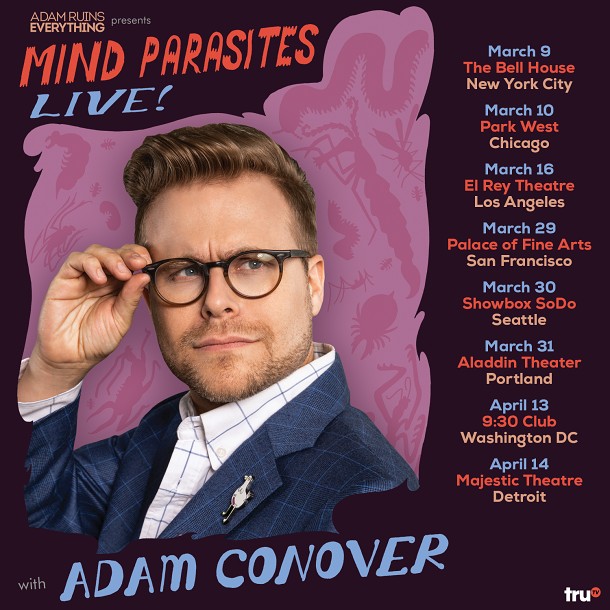
Come see my new show MIND PARASITES LIVE in a city near you! It’s a brand new hour of hilarious, mind-expanding information about the devious forces that are trying to control your mind. You’ll laugh, you’ll learn, you’ll do another thing starting with L!
First, as member of two unions, I know that I owe my mortgage payment to solidarity. If it weren’t for the fellow union members and leaders who have my back, the barons of the TV industry would happily pay me a nickel a page and spend what would have been my residuals on more caviar to put in their infinity pools. So when I see other workers fighting for their own fair shake, I consider it my duty to pay it forward and have their back too.
But more importantly, I’m a child of public schools and I know how important they are. And what the teachers of UTLA are fighting for isn’t just wages — they’re saving public education in Los Angeles.
… The only way to change a system this unjust and this entrenched is for someone to finally stand up and say, “This is unacceptable, and we can’t allow it to go on.” The school board wasn’t going to; superintendent Austin Beutner wasn’t going to; so it fell to the teachers to do so. By exerting pressure from the bottom up, they aim to force reform all the way up to Sacramento. It’s a game plan every Hollywood negotiator knows well: If you’re being told “It’s not in the budget,” then you exert your leverage until you force the fat cats holding the wallet to make the budget bigger. Los Angeles is a rich city; California is a rich state; the United States is a rich country. The money is out there, and Los Angeles teachers are demanding that it be spent where it belongs, on our kids. They deserve our support.
I use the Libby app to check out audiobooks from my public library. Right now, I’m listening to “Evicted,” by Matthew Desmond, which is a really incredible set of stories of poverty in Milwaukee, and about the underreported epidemic of eviction that is contributing to the cycle of poverty. The cool thing is, it’s the rare piece of nonfiction that isn’t just dumping the policy problem on you. It’s incredibly, beautifully reported personal accounts of individual families and what their lives are like on a day-to-day basis.
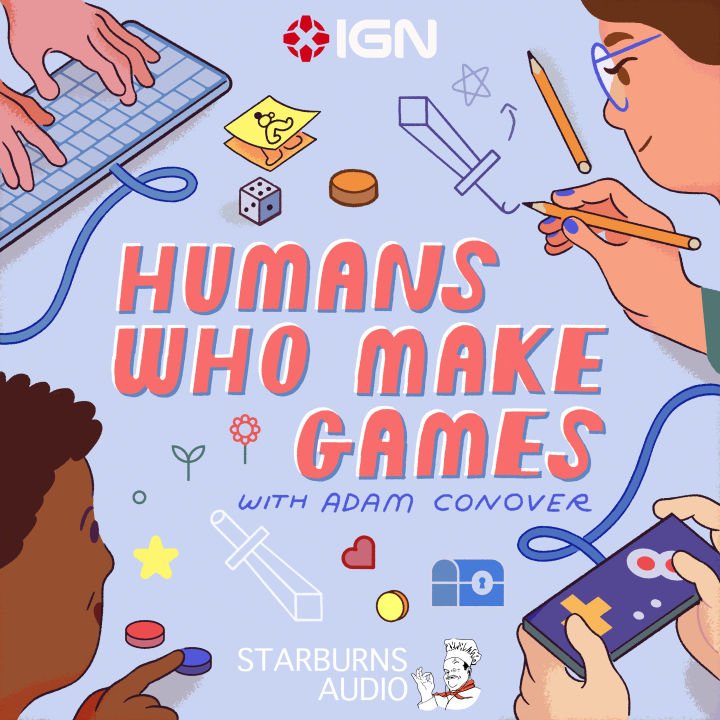
I’m so excited to announce the launch of my new podcast, Humans Who Make Games, in partnership with IGN and Starburns Audio.
Humans Who Make Games is an intimate longform interview podcast where I sit down with the creators and artists behind your favorite video games.
As a life-long lover of games, I’ve always felt that it’s so strange that the people who make them are so often invisible. You can find millions of hours of breakdowns of games’ plots, mechanics, or history on the Internet, but it’s strikingly rare that you have the chance to get to know the people behind the keyboard who created the dang game to begin with. That’s what this show attempts to rectify.
For our first season, I talk with Edmund McMillen (Super Meat Boy, Binding of Isaac), Derek Yu (Spelunky), Christine Love (Analogue: A Hate Story, Ladykiller in a Bind), Justin Ma (FTL, Into the Breach), and many more about what their first memory of games was, how they got into the industry, and what brought them to create the games they did.
I’d like to thank the amazing Sophia Foster-Dimino for providing our gorgeous cover artwork, and my favorite game-and-film composer Disasterpeace for our theme music.
Here’s a segment from our newest episode, Adam Ruins A Sitcom, in which we discuss the real history behind the “model minority” myth that is so often placed on Asian-Americans:
Here are my responses to two common questions about this video that I’ve received on Twitter. First, in response to the question of whether or not Germans were interned in camps during World War II:
Here’s some fuller context. None of this excuses or diminishes the unjust internment of those German nationals. But the fact is that the US government had a sweeping race-based policy of interning nearly ALL people of Japanese descent, which it did not for Germans and Italians. pic.twitter.com/0VrQpFyb6c
Secondly, in response to our decision to call the camps that Japanese-Americans were held in “concentration camps” rather than internment camps:
To those in comments of our recent video arguing that the camps Japanese-Americans were interned in should not be referred to as “concentration camps”: that’s what the US government called them, so that’s we call them. Scholars agree. https://t.co/TV4cwtbqXcpic.twitter.com/jh90DSLPHo
Here’s a good piece from NPR which summarizes the reasons many scholars choose to use the term “concentration camp” rather than the more sanitized “internment camp:”
While it’s certainly possible to have a good-faith disagreement on which term is more apropos, it is clear that “concentration camp” is an acceptable choice, and we chose to side with scholars that believe that its use is the most accurate way to highlight the deep human rights abuse that the camps represented.
A viewer of our show named David Miller sent me this message (somewhat condensed):
I just found your show on Netflix, and I loved it until I got to the episode on drugs. Specifically, the section on OxyContin. It really, really pissed me off. While I agree that we need to find better and safer alternatives, this drug has been heavily misrepresented.
In the real world, people with chronic pain problems (like me, and my parents) require it just to be able to function. I’m unable to work, cook, or even shower due to the extreme pain I’m in 24 hours a day. Without OxyContin I’m plagued by chronic fatigue because it takes so much energy just to be alive.
Taken appropriately, it’s basically impossible to become addicted.
Lawmakers would have us believe that prescription opiates are a gateway to abuse and heroin. The reality is that heroin addicts only seek (or buy) prescription opiates when they’re unable to get heroin. Why would they? Heroin is fifty times stronger than OxyContin and actually SIGNIFICANTLY cheaper than it too.
I’d like to thank David for his message. When we did our 2016 segment on how pharmaceutical companies created the opioid crisis, the narrative that unscrupulous doctors who got patients hooked on their drugs was widely reported. In the time since, it’s become clear that this narrative was not entirely correct.
While Big Pharma is absolutely culpable for causing the crisis, the blame put on doctors and patients has resulted in many people with chronic pain being unable to fill their prescriptions because of the unfair presumption that they might abuse them. A particularly good piece of journalism on this topic is The Pain Refugees, by Brian Goldstone in Harper’s; it is a harrowing account of patients who suddenly lose access to the only treatment that works for them. That is wrong, and unfair.
While I don’t think the evidence bears out David’s assertion that there is no connection between prescription opioids and addiction, I do wish that our segment had focused less on the behavior of individual doctors and patients, and kept the spotlight on the corporations that are truly to blame. Were we to do this topic again, knowing what we do today, we would have approached it a bit differently.
Here’s the segment from last night’s Adam Ruins Tech on how tech companies use software and restrictive licenses to make sure that you don’t really own the gadgets you buy from them.
Thanks so much to Kit Walsh, Staff Attorney at the EFF for appearing in this segment and helping us think through this issue. And I’m grateful to Andra Whipple and Mervyn Degaños for their fantastic writing and research on this episode; not to mention the inimitable Krys Marshall for bringing digital assistant Cori to life.
In the podcast, we talked about what it was like to work together creatively at a young age, spill the dirt on our joint living situation (including our truly bizarre system for doing the dishes), and Raphael asked me some of the best questions I’ve ever been asked about Adam Ruins Everything in an interview. We got personal! Check it out.
From Adam Ruins Sleep, here’s our newest segment: Mattresses Are One Big Rip-Off. Thanks to Brian Frange and Kate Doyle for their wonderful work on this piece; plus appearances by human sparkplug Arden Myrin and slimeball Ben Rameaka!
Adam Ruins Everything is back with all new episodes airing every Tuesday night at 10pm on TruTV! And you know what that means — new full segments of the show are going up on YouTube! This first is from our season premiere, Adam Ruins Guns: “Everyone Leaves Black People Out of the Gun Debate.”
I’m incredibly proud of this segment, and am enormously grateful to Rasheda Crockett, Sam Roudman, head writer Alison Zeidman, head of research Natalie Shure, and the rest of our creative team for doing such amazing work with one of the most difficult topics we’ve ever done. Not to mention the funny and heartfelt performances by Punkie Johnson, Landry Allbright, and Rick Overton, and Tim Wilkime’s fine directing. Hope you enjoy, and come back every week for more new episodes!